


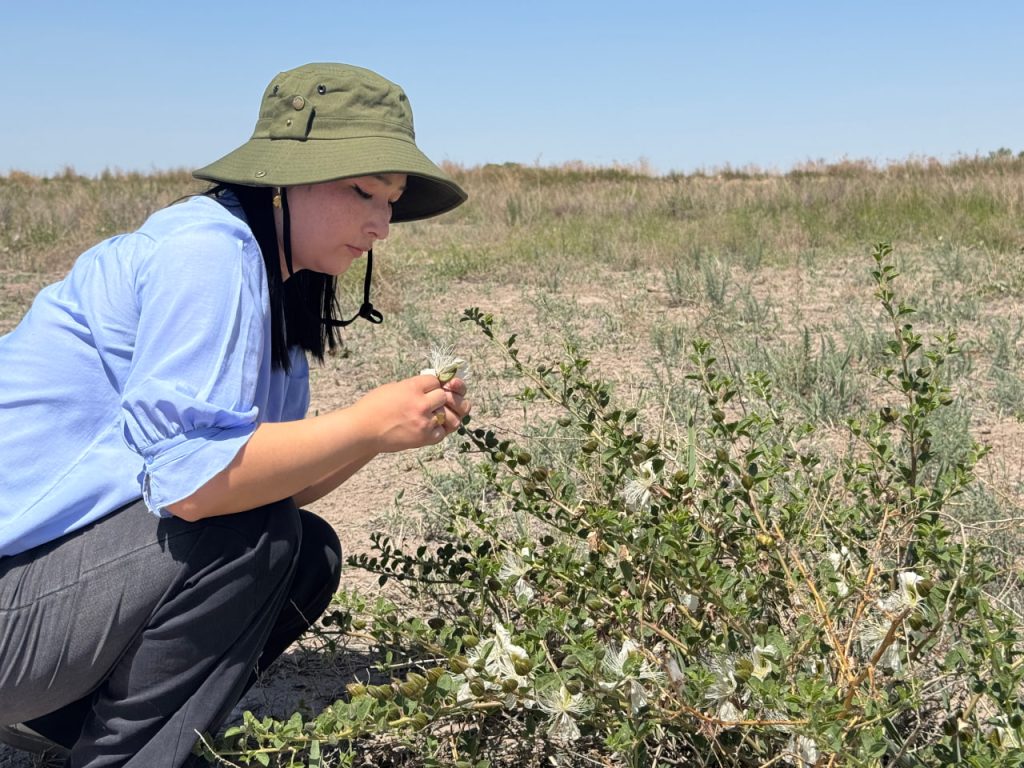
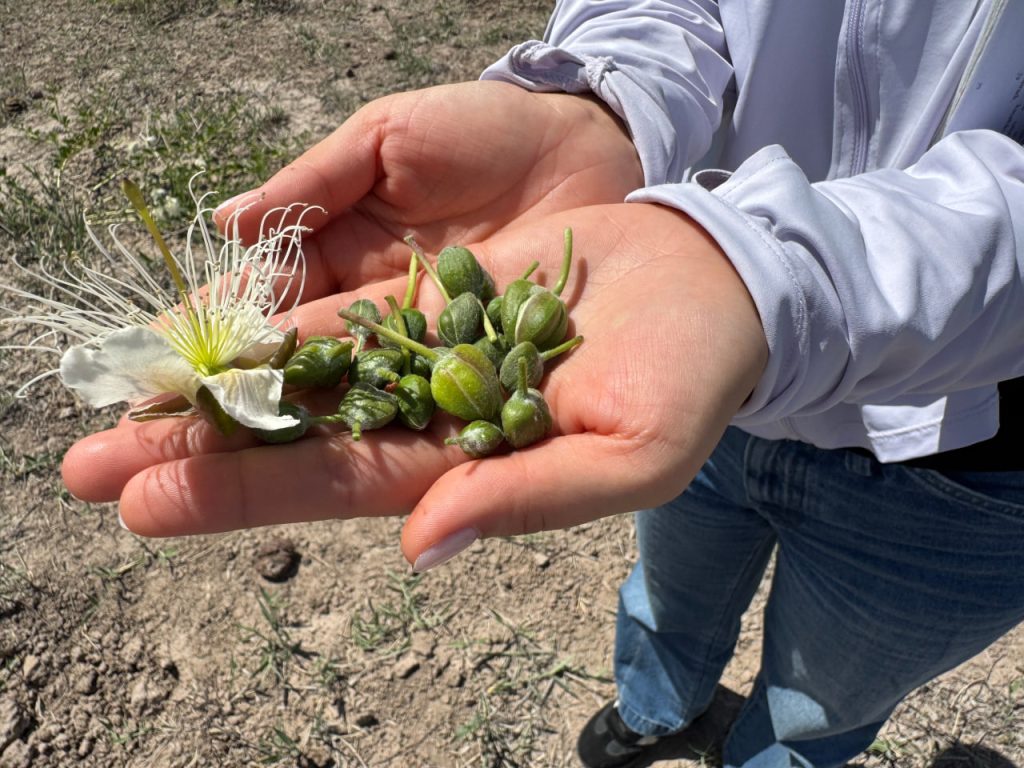
Capers (Cāpparis/Gewil) are the unopened flower buds and fruits of a perennial shrub of the caper family. Karakalpakstan is the right place for this plant, as they prefer a dry climate with minimal rainfall, making the Aral Sea region an ideal place to grow them.
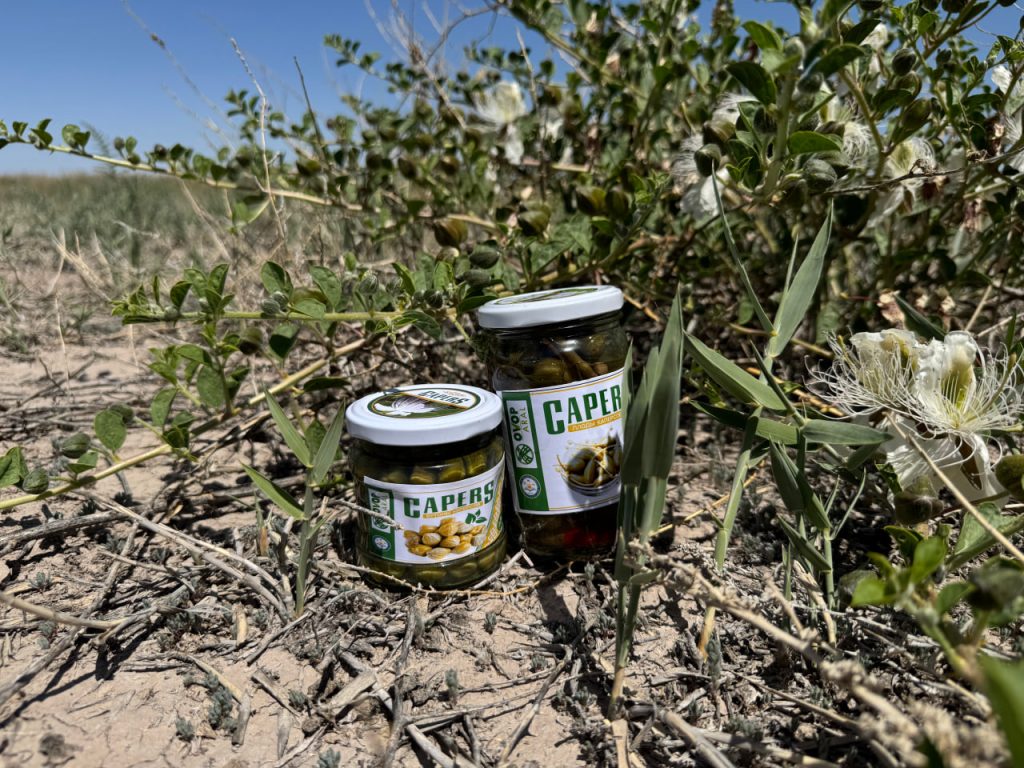
Capers are usually widely used in cooking and various forms of processing, in particular as pickled, canned, culinary additives, in the form of sauce and oil, as well as as cosmetics and folk medicine.
Capers are not only a delicacy in cooking, but also a healthy product with many beneficial properties. They can be used not only to improve the taste of dishes, but also to maintain health, improve digestion, reduce inflammation and combat oxidative processes in the body.
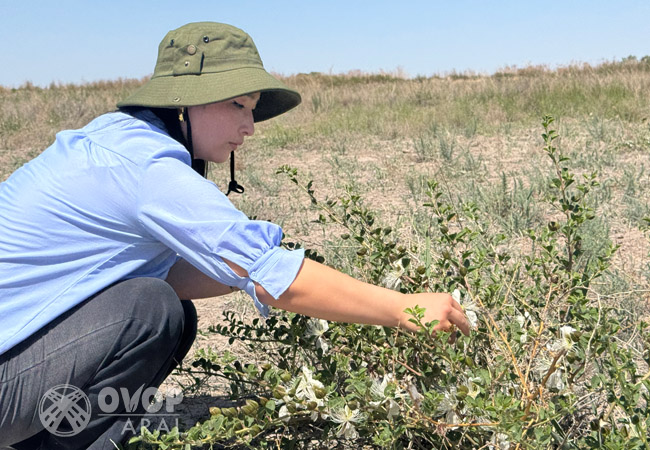
Currently, OVOP movement participant Raushan Sharafatdinova is growing a special variety of capers on a 1-hectare plot in the Chimbay district, adapted to the climatic conditions of the Aral Sea region. This variety was chosen for its resistance to the hot and dry climate typical of Karakalpakstan, as well as for the high quality of the buds.
Raushan is not only engaged in growing capers, but also actively works on promoting this product as a potential export-oriented brand of the region. She plans to expand the cultivated area and organize primary processing of capers on site: salting and pickling buds, as well as packaging them for sale in retail chains and for export with the support of UNDP within the framework of the project “The Project for Supporting Self-reliance through Climate-resilient Agriculture in the Aral Sea Region” implemented in four districts of the Republic of Karakalpakstan (Chimbay, Kegeyli, Nukus and Khodjeyli) with financial support from the Government of Japan.
Recently, capers have become increasingly popular in Karakalpakstan due to their resistance to local climatic conditions and the potential to become a profitable product for local producers and farmers. Under the One Village One Product program, capers can become a unique and sought-after product that will benefit not only local residents but also consumers around the world.